EET 2.0 from January 2027: Who Will Be Affected and How to Prepare
Published: 02. 11. 2026
Reading time: 8 minutes

Electronic sales registration is returning. The new version, known as EET 2.0, is intended to be simpler than the original system, but for the first time it will also apply to card payments. We summarise the current status of the legislation, who will be affected and what will be needed to meet the requirements.
Updated as of 6 August 2026
ARTICLE CONTENTS
- Current status of the legislation
- How EET 2.0 differs from the original system
- Who is subject to sales registration
- Which payments are registered and which are not
- What EET 2.0 does not introduce
- Related tax changes
- How to prepare
- Where to find official information
- How ČSOB supports sales registration
- Frequently asked questions
- Summary: EET 2.0 in eight points
Current status of the legislation
The government approved the draft Sales Registration Act on 4 May 2026. The Chamber of Deputies passed it at its third reading on 15 July 2026, and the bill is now proceeding to the Senate. It must then be signed by the President of the Czech Republic.
The proposed effective date is 1 January 2027, with the system operating in a voluntary pilot mode during the first month. Until the legislative process is completed, the current situation remains unchanged: there is currently no obligation to register sales, and the final form of the rules may still change.
How EET 2.0 differs from the original system
The new legislation replaces the system established under Act No. 112/2016 Coll. and draws on experience with its operation as well as technological developments in recent years. The main differences are:
- A single online regime instead of several phases and variants.
- A minimum scope of transmitted data. The Financial Administration receives basic payment information, but not details of what was sold or to whom.
- Administration through the DIS+ Tax Information Box on the MOJE daně portal.
- No obligation to purchase new cash register equipment. Equipment acquired for the original EET system can also be used.
- A free web application provided by the Financial Administration for the smallest taxpayers, available on mobile phones, tablets and computers.
Who is subject to sales registration
The obligation will apply to income taxpayers who accept so-called contact payments, meaning payments made during direct personal contact with a customer or at a business premises.
Crucially, the registration obligation is determined by the nature of the interaction between the business and the customer, not by the type of business. In practice, it will primarily concern shops, service businesses, restaurants and cafés, bars, market stalls and tradespeople who accept payment on site.
Sales are assigned to a so-called registration unit. This may be, for example, a business premises, website, application or vehicle used to provide a service or deliver goods.

Which payments are registered and which are not
Contact payments subject to registration:
- cash payments
- card payments
- QR payments
- other similar on-site payment methods
Remote payments not subject to registration:
- standard bank transfers
- invoice payments
- e-shop payments without direct personal contact
The inclusion of card payments is the most significant change compared with the original EET system. This means that, for the first time, the registration obligation will also affect businesses that accept virtually no cash and process all their sales through a payment terminal.
What EET 2.0 does not introduce
A number of concerns associated with the previous sales registration system remain. Under the currently approved wording:
- Receipts do not have to be printed. A paper receipt is not mandatory and may also be issued electronically, for example via a QR code.
- You do not have to buy new hardware. The law does not require the purchase of new cash register equipment.
- No product information is transmitted. The system works only with the essential minimum payment data.

Related tax changes
The legislation also includes several changes that are not directly related to sales registration but will affect businesses:
- Tips will be exempt from employee income tax and social and health insurance contributions up to 7% of the business’s revenue. This applies to employees of restaurants, cafés and pubs.
- Non-alcoholic beverages served in restaurants will move to the 12% VAT rate.
- The annual income threshold triggering the obligation to file a tax return will increase from CZK 50,000 to CZK 100,000.
- The childcare tax credit and student tax credit will be reinstated.
- Specified health benefits provided by an employer will be exempt from income tax.
How to prepare
Only five months remain until the planned effective date. The following practical steps should not be postponed:
- Check whether the obligation applies to you. What matters is how you collect payments from customers, not the sector in which you operate.
- Find out whether your current equipment supports EET 2.0. Cash register system developers have had access to the Financial Administration’s test environment since July 2026, so manufacturers should already know. Ask your supplier directly.
- Obtain access to DIS+ and arrange the necessary certificates in advance. Ideally, do this in autumn 2026, as authorities are likely to be busy in December.
- If you do not yet have a cash register solution, choose one that can handle sales registration automatically and will be ready in time for the launch.
- Monitor developments. The law has not yet passed the Senate, and some parameters may still change.
Where to find official information
The Financial Administration has published a set of answers to frequently asked questions about EET 2.0, including practical model situations, and continues to update it. The Ministry of Finance publishes the current wording of the bill and the implementation timetable.
How ČSOB supports sales registration
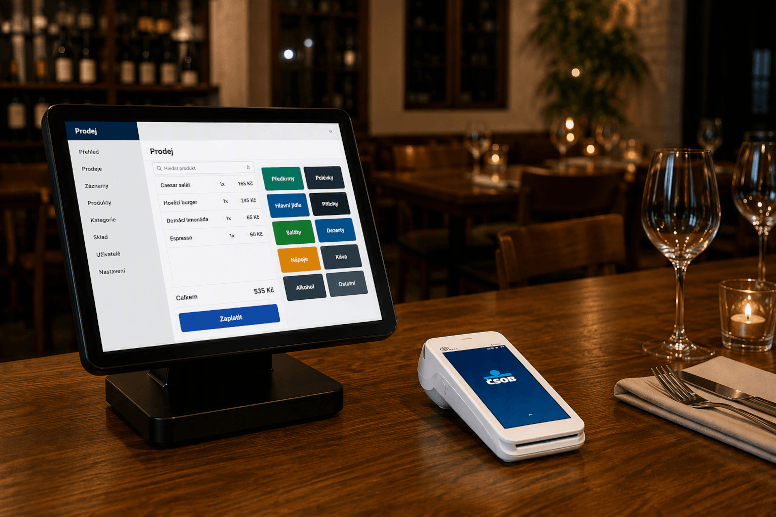
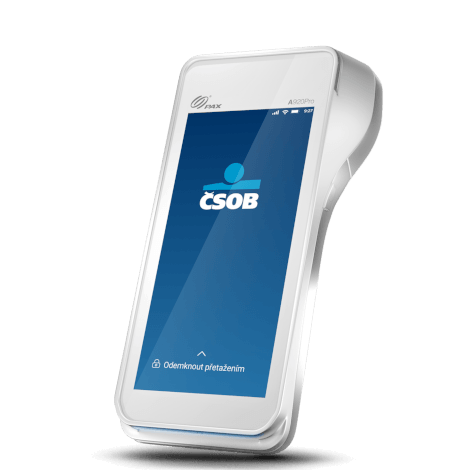
If you need a cash register solution for EET registration, we offer ČSOB Cash Register, cash register software that runs directly in the payment terminal. You can ring up items, accept payment and issue a receipt using one device, while the sale is automatically registered under EET.
In brief:
- EET 2.0 support in all packages.
- Card, mobile and cash payments in one device.
- Digital receipts via QR code, with no printing required.
- Revenue overviews, product management and online administration through a web portal.
- Offline mode, which works even without an internet connection.
- Payment terminal rental included in the price, with no commitment or upfront costs, plus free delivery, installation and training.
The cash register is available in three packages depending on the type of business: CLASSIC for service providers and smaller businesses, RETAIL with inventory management, and HOSPITALITY with table management and kitchen communication.
ČSOB Cash Register is available on selected payment terminals running the Android operating system. If you are not sure whether it can be activated on your terminal, contact us.
Cash register in the payment terminal
Sell, accept payments and keep track of your revenue in one device
Frequently asked questions about EET 2.0
When will EET 2.0 take effect?
The proposed effective date is 1 January 2027, with the first month operating in pilot mode. The law is still undergoing the legislative process: following approval by the Chamber of Deputies, it is being considered by the Senate.
Will card payments be registered?
Yes. Unlike under the original EET system, card payments made at business premises are classified as contact payments subject to registration.
Will I have to print receipts?
No. A paper receipt is not mandatory and may also be issued electronically.
Do I need to purchase a new cash register because of EET 2.0?
Not necessarily. The law does not require new equipment, and equipment used for the original EET system may also be used. Check with your supplier whether its solution will be ready for EET 2.0.
Does sales registration also apply to e-shops?
Payments made remotely without direct personal contact with the customer are not registered. However, if goods are collected at a pick-up point and the customer pays there, this is a contact payment.
Summary: EET 2.0 in eight points
- EET 2.0 is expected to take effect on 1 January 2027. January 2027 will operate as a voluntary pilot month.
- The law has not yet been finally approved. The Chamber of Deputies passed it on 15 July 2026, the Senate is now considering it, and it must then be signed by the President. Until then, there is no obligation to register sales.
- EET 2.0 applies to contact payments, including cash, card payments, QR payments and other payments made during direct personal contact with a customer or at business premises.
- Card payments will be registered. This is the main difference compared with the original EET system, which did not cover them.
- Remote payments are not registered. Bank transfers, invoice payments and e-shop payments made without direct personal contact are not subject to registration.
- Printing receipts is not mandatory. A receipt may also be issued electronically, for example via a QR code.
- New cash register equipment is not mandatory. Equipment acquired for the original EET system may also be used, and the state will offer a free web application to the smallest taxpayers.
- Tips will be exempt from taxes and social and health insurance contributions up to 7% of the business premises’ monthly revenue.